
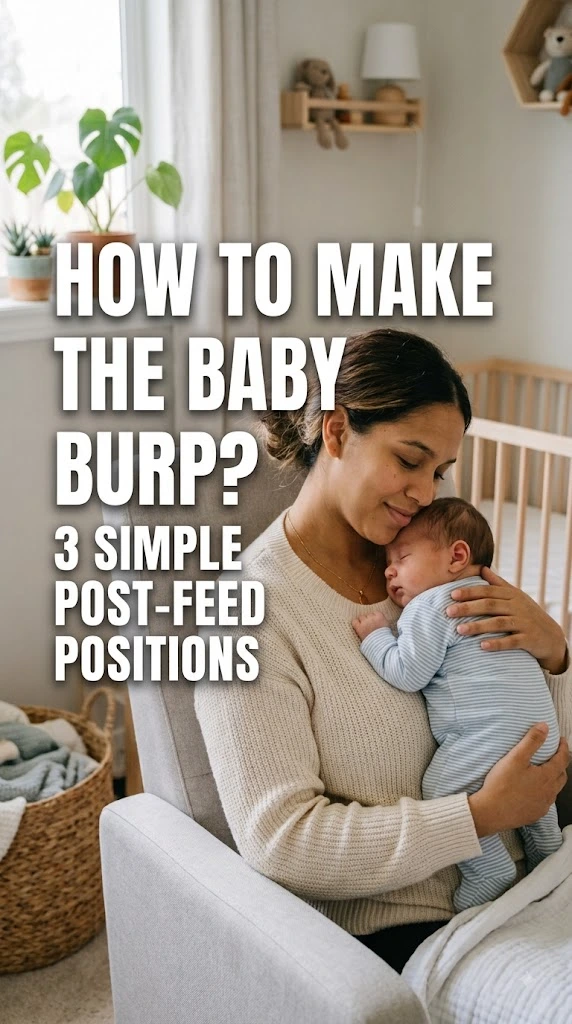
When I first started caring for a newborn, one of the things I worried about most after feeding was burping. I remember wondering, “Does my baby really need to burp? What should I do if there is no burp?”
With time, I learned that there is no single position that works every time. Some babies burp almost immediately, while others need a few minutes. There are also times when a baby simply does not burp.
Here at home, I try not to turn burping into a strict rule. I watch the baby, keep them comfortable and gently help them release any air they may have swallowed during feeding.
Why Does a Baby Need to Burp?
Babies can swallow some air while feeding. This can happen during breastfeeding as well as bottle-feeding.
When air stays in the stomach, some babies may become uncomfortable. They might squirm, make faces, pull their legs up or start crying.
Burping can help release some of that trapped air.
However, one thing I learned is that not every baby burps after every feeding. Some babies swallow very little air and are perfectly comfortable without burping.
If the baby seems calm and content after feeding, there is usually no need to spend a long time trying to force a burp.
How to Burp a Baby
There are several gentle positions you can try.
Hold the Baby Against Your Shoulder
This is probably the position I use most often.
I hold the baby upright against my chest, with their head resting over my shoulder. With one hand, I support the baby securely, while using the other hand to gently rub or pat their back.
I never hit the baby's back hard. Gentle pats or slow rubbing are enough.
Sometimes the burp comes out quickly. Other times, it takes a few minutes.
The important thing is to keep the baby well supported and never leave them in a position where they could slip.
Sit the Baby on Your Lap
Another position that can help is sitting the baby upright on your lap with their body slightly leaning forward.
I support the baby's chest and chin with one hand, making sure not to put pressure on the throat. My other hand is then free to gently rub or pat the baby's back.
This can be useful if the baby does not burp while resting against your shoulder.
Place the Baby Across Your Lap
You can also place the baby face-down across your lap while keeping their head supported and slightly higher than their chest.
Then gently rub their back.
With a newborn, I am especially careful about the head and neck because they cannot support their head properly yet. I never leave the baby unattended in this position.
How Long Should You Try to Burp a Baby?
There is no exact number of minutes that every baby needs.
Here at home, if the baby seems comfortable, I usually try for a few minutes. If there is no burp but the baby remains calm, I do not keep trying indefinitely.
If the baby seems uncomfortable, squirms or cries, I may change positions and try again.
One thing I learned is that trying too hard can sometimes make the baby even more upset. Sometimes simply holding the baby upright for a little while is enough.
What If the Baby Does Not Burp?
This is one of the most common questions new mothers have.
If the baby does not burp after a few minutes but is calm, breathing normally and showing no signs of discomfort, there is usually no reason to panic.
Some babies simply do not need to burp after every feeding.
I usually keep the baby upright for a few minutes after feeding. If the baby remains comfortable, I continue with our normal routine.
For me, the baby's behavior is more important than hearing the actual sound of a burp.
How Can I Tell If My Baby Has Gas?
It is not always easy to tell the difference between hunger, tiredness, gas and other reasons for crying, especially during the first few months.
When I suspect that my baby has gas, I look for signs such as restlessness, pulling the legs toward the body, straining, making uncomfortable faces or crying shortly after feeding.
When this happens, I first try to keep the baby comfortable and help them burp.
I also avoid pressing on the baby's stomach or making sudden movements.
What If the Baby Is Still Uncomfortable?
If the baby has already eaten, has a clean diaper and is still unsettled, I try not to assume that the problem is always gas.
The baby may be tired, need to be held or simply need a few quiet minutes to calm down.
Here at home, when this happens, I like to hold the baby close to my body, speak softly and make slow movements.
Sometimes, after a few minutes in my arms, the baby releases the air naturally and becomes much more relaxed.
Does a Baby Need to Burp at Night?
At night, I try to keep everything as calm as possible.
If the baby wakes up to feed, I keep the lights low and avoid talking or playing too much. After feeding, I may hold the baby upright for a few minutes to give them a chance to burp.
If there is no burp but the baby seems comfortable, I do not turn it into a long nighttime activity.
The goal is to keep the night calm so the baby can return to sleep.
Important Safety Tips When Burping a Baby
Always support the baby's head and neck properly. Never shake the baby or use forceful movements to try to make them burp.
There is also no need to hit the baby's back hard. Gentle pats or rubbing are enough.
Newborns have limited head and neck control, so they need constant support when being held.
After feeding, when it is time for the baby to sleep, place them on their back on a firm, flat sleep surface designed for infants. Keep the sleep area free of pillows, stuffed toys and loose blankets.
When Should You Contact a Doctor?
Occasional gas and difficulty burping are common, but some symptoms should not be ignored.
Seek medical advice if your baby has difficulty breathing, persistent vomiting, refuses several feedings, appears to be in significant pain, is unusually sleepy or shows behavior that is clearly different from normal.
It is also worth speaking with your baby's healthcare provider if your baby seems uncomfortable after almost every feeding.
What I Learned About Burping My Baby
At first, I thought I had to hear that little burp after every feeding to know that everything was okay.
Now I see it differently.
I learned to watch the baby. If they are calm, comfortable and satisfied, I do not worry simply because there was no burp.
If the baby seems uncomfortable, I try another position, gently rub their back and give them some time.
Caring for a newborn is much more about observing and learning than following a perfect formula. Every baby has their own rhythm.
And for me, that has been one of the biggest lessons of motherhood: we do not always need to do more; sometimes we simply need to give the baby comfort, security and time.
Be the first to comment!